Daily Study Routine: A Complete Guide for Students
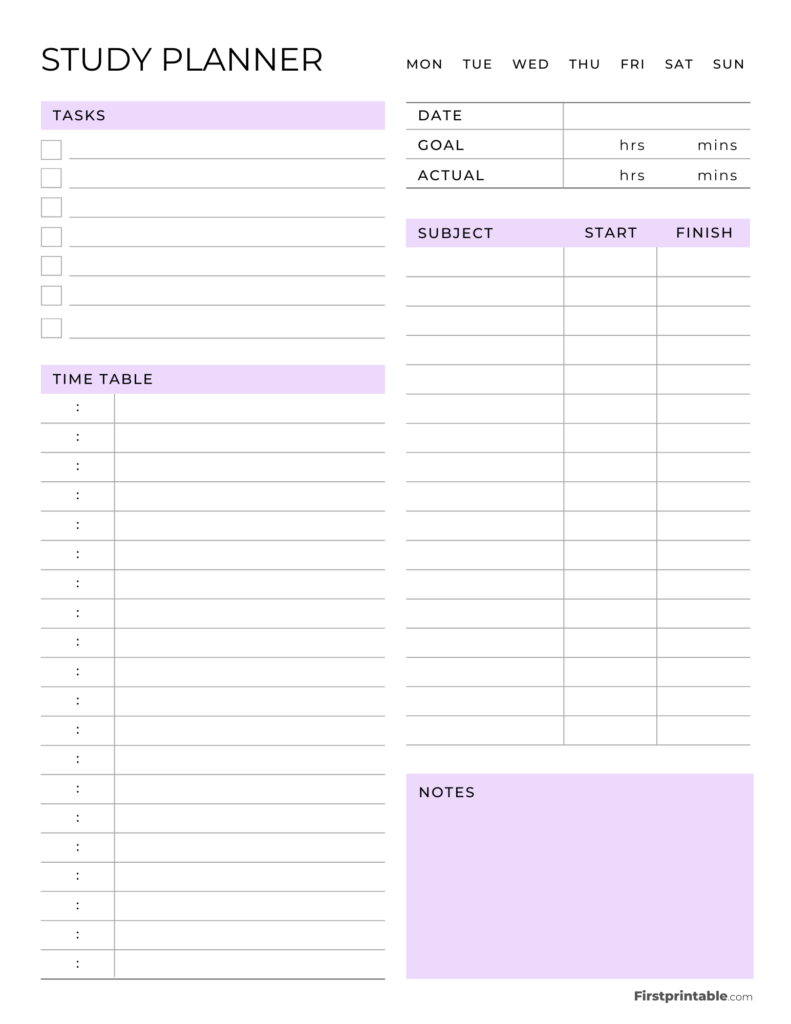
A daily study routine helps students study in an organized and effective way. Many students work hard but still get poor results because they study without a plan. This guide explains what a daily study routine is, why it matters, and how to create one step by step.
What Is a Daily Study Routine?
A daily study routine is a fixed plan that decides:
- which subjects to study,
- when to study them,
- how long to study,
- and which method to use.
Explanation:
When students follow a routine, they do not waste time deciding what to study. This reduces stress and builds consistency.
Why a Daily Study Routine Is Important
A proper daily study routine:
- improves focus,
- saves time,
- reduces exam anxiety,
- and improves memory.
Explanation:
Regular study trains the brain to concentrate at fixed times. Over time, learning becomes easier and faster.
Step 1: Identify Your Best Study Time
Every student has certain hours when concentration is highest.
Explanation:
Studying during peak focus hours helps you understand topics quickly. Studying when tired leads to poor retention.
Example:
- Morning hours are good for reading and memorizing.
- Evening or night hours are good for problem-solving and practice.
Step 2: Set Clear Daily Study Goals
Never start studying without a goal.
Explanation:
Clear goals guide your effort and prevent distraction.
Poor goal:
“I will study math.”
Good goal:
“I will revise algebra formulas and solve 20 questions.”
Step 3: Divide Study Time into Sessions
Avoid studying for long hours continuously.
Explanation:
The brain learns better in short, focused sessions. Each session should have a clear purpose.
Recommended structure:
- Session 1: Learn new concepts.
- Session 2: Revise notes.
- Session 3: Practice questions.
This combination strengthens understanding and memory.
Step 4: Use the Pomodoro Technique
Study in short time blocks.
Method:
- Study for 25 minutes.
- Take a 5-minute break.
- After four rounds, take a longer break.
Explanation:
Short sessions keep attention high and prevent mental fatigue.
Step 5: Study Smart Instead of Studying Long
Long hours do not guarantee success.
Explanation:
Smart study methods force the brain to think and recall information.
Effective methods include:
- self-testing after studying,
- revising topics after gaps,
- solving practice questions.
One focused hour is more effective than many unfocused hours.
Step 6: Remove All Distractions
Distractions reduce study quality.
Explanation:
Phones, noise, and clutter lower concentration even if they are not actively used.
What to do:
- keep the phone away,
- turn off notifications,
- study at a clean desk in a quiet place.
Step 7: Maintain Sleep and Health
Health directly affects learning.
Explanation:
The brain stores information during sleep. Lack of sleep weakens memory and focus.
Students should:
- sleep 7 to 9 hours daily,
- drink enough water,
- take short breaks during study.
Sample Daily Study Routine
Morning (6:00 AM – 8:00 AM):
Learn new topics.
Afternoon (2:00 PM – 3:00 PM):
Revise notes.
Evening (6:00 PM – 8:00 PM):
Practice questions.
Night:
Light revision and proper sleep.
Explanation:
This routine balances learning, revision, and practice for better results.